


(cd /tmp/.X11-unix && for x in X*; do echo ":${x#X}"; done)
disable error sound

nine leadership coaching skills... how are these not things you do when you train someone?
listening
questioning
giving feedback
assisting with goal setting
showing empathy
letting the coachee arrive at their own solution
recognizing and pointing out strengths
providing structure
encouraging a solution-focused approach
fastai is a modern, open source, deep learning library which is organized around two main design goals: to be approachable and rapidly productive, while also being deeply hackable and configurable
that using a layered API in deep learning has very significant benefits for researchers, practitioners, and students. Researchers can see links across different areas more easily, rapidly combine and restructure ideas, and run experiments on top of strong baselines. Practitioners can quickly build prototypes, and then build on and optimize those prototypes by leveraging fastai’s PyTorch foundations, without rewriting code. Students can experiment with models and try out variations, without being overwhelmed by boilerplate code when first learning ideas.
a bewildering array of comparisons, useful as a literature review of sorts
The concept of non-linearity in a Neural Network is introduced by an activation function which serves an integral role in the training and performance evaluation of the network. Over the years of theoretical research, many activation functions have been proposed, however, only a few are widely used in mostly all applications which include ReLU (Rectified Linear Unit), TanH (Tan Hyperbolic), Sigmoid, Leaky ReLU and Swish. In this work, a novel neural activation function called as Mish is proposed. The experiments show that Mish tends to work better than both ReLU and Swish along with other
standard activation functions in many deep networks across challenging datasets. For instance, in Squeeze Excite Net- 18 for CIFAR 100 classification, the network with Mish had an increase in Top-1 test accuracy by 0.494% and
1.671% as compared to the same network with Swish and ReLU respectively. The similarity to Swish along with providing a boost in performance and its simplicity in implementation makes it easier for researchers and developers to
use Mish in their Neural Network Models.
We propose a decentralized variant of Monte Carlo tree search (MCTS) that is suitable for a variety of tasks in multi-robot active perception. Our algorithm allows each robot to optimize its own actions by maintaining a probability distribution over plans in the joint-action space. Robots periodically communicate a compressed form of their search trees, which are used to update the joint distribution using a distributed optimization approach inspired by variational methods. Our method admits any objective function defined over robot action sequences, assumes intermittent communication, is anytime, and is suitable for online replanning.
The fact that China’s authoritarian system is particularly poor at dealing with public health emergencies that require timely, transparent and accurate information makes this far more significant than any other challenge Mr Xi has faced so far.
News, analysis and comment from the Financial Times, the worldʼs leading global business publication
Deep reinforcement learning has achieved great successes inrecent years, however, one main challenge is the sample in-efficiency. In this paper, we focus on how to use action guid-ance by means of a non-expert demonstrator to improve sam-ple efficiency in a domain with sparse, delayed, and pos-sibly deceptive rewards: the recently-proposed multi-agentbenchmark of Pommerman. We propose a new frameworkwhere even a non-expert simulated demonstrator, e.g., plan-ning algorithms such as Monte Carlo tree search with a smallnumber rollouts, can be integrated within asynchronous dis-tributed deep reinforcement learning methods. Compared to avanilla deep RL algorithm, our proposed methods both learnfaster and converge to better policies on a two-player miniversion of the Pommerman game.

allow automatic downloading of latest release.
very useful since it's basically impossible to do manually at the terminal.
cleaner uninstall.
delete /etc/X11/xorg.conf
"Thank you, deleting the config file and letting xorg recreate it solved it."
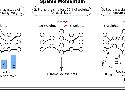
The results are quite impressive! We compared against compression algorithms on MNIST, where sparse momentum outperforms most other methods. This is a pretty good result given that compression methods start from a dense network and usually retrain repetitively while we train a sparse network from scratch! Another impressive result is that we can match or even exceed the performance of dense networks by using 20% of weights (80% sparsity). On CIFAR-10, we compare against Single-shot Network Pruning which is designed for simplicity and not performance — so it is not surprising that sparse momentum does better. However, what is interesting is that we can train both VGG16-D (a version of VGG16 with two fully connected layers) and Wide Residual Network (WRN) 16-10 (16 layers deep and very wide WRN) to dense performance levels with just 5% of weights. For other networks, sparse momentum comes close to dense performance levels. Furthermore, as I will show later, with an optimized sparse convolution algorithm, we would be able to train a variety of networks to yield the same performance levels while training between 3.0-5.6x faster!

everybody on the entire Earth that ever wants to look at the sky has to look at the Starlink satellites.”
Germans often take pride in the way the country has faced up to its past, a collective struggle known as Vergangenheitsbewältigung. It includes a commitment to keep alive the memory of the Holocaust, and to accept Germany’s sole and permanent responsibility for the murder of six million Jews.
The death of the 34-year-old doctor marked a pivotal moment in the coronavirus outbreak, as its rapid spread presents President Xi Jinping with his gravest political and economic challenge since assuming power in 2012.
Authorities are struggling to contain public anger over the official mishandling of the outbreak that has killed more than 600 people. The crisis also threatens to undermine the central government’s narrative that it is in control of the rapidly evolving situation.
References to [Li's] passing had been viewed 270m times on Weibo, China’s Twitter-like platform, early on Friday after being announced by a Wuhan hospital.
Another Weibo user called Ren Xuanpan wrote “we all know it’s not the bat that kills people” — a reference to suggestions that the animal was the origin of the virus.
“The government has made Wuhan a living hell,” said another post.
Many users have posted lyrics to “Do you hear the people sing”, a song from the musical Les Misérables, to commemorate Li.
The Chinese government operates one of the world’s most comprehensive online censorship programmes and is able to cleanse social media of criticism of the government.
The hashtag “I want freedom of speech” was censored during the night and is now unsearchable on both Weibo and Douban, another social networking platform.
When dissident and Nobel laureate Liu Xiaobo died in custody in 2017, internet users posted candle emojis, an expression that was eventually blocked by the government.
During the last week of January, social media experts noted that a much higher degree of anti-government commentary — mainly anger at local government mismanagement of the crisis — had been permitted. But since the start of February, censors have stepped up efforts to remove negative comments.