Question How much do drug companies spend on research and development to bring a new medicine to market?
Findings In this study, which included 63 of 355 new therapeutic drugs and biologic agents approved by the US Food and Drug Administration between 2009 and 2018, the estimated median capitalized research and development cost per product was $985 million, counting expenditures on failed trials. Data were mainly accessible for smaller firms, products in certain therapeutic areas, orphan drugs, first-in-class drugs, therapeutic agents that received accelerated approval, and products approved between 2014 and 2018.

most of the measures used in China to stop the virus were traditional public health moves that are broadly accepted — and the draconian measures were rarer.
I think the key learning from China is speed — it’s all about the speed. The faster you can find the cases, isolate the cases, and track their close contacts, the more successful you’re going to be.
Since coming back from China, everybody I talk to begins with, “We can’t lock down a city of 15 million people like China.” I say, “Why would you ever want to?” And I ask, “Does your population know x, y, z [about the virus]?” I learn they haven’t started with the basics.
So, No. 1, if you want to get speed of response, your population has to know this disease. You find any population in the West and ask them what are the two presenting signs you have to be alert to. ... the two initial symptoms most common [are] fever and dry cough... [But many still think] it’s a runny nose and cold. Your population is your surveillance system. Everybody has got a smartphone, everybody can get a thermometer. That is your surveillance system. Don’t rely on this hitting your health system, because then it’s going to infect it.
the key is public information and having an informed population, finding those cases, rapidly isolating them. The faster you isolate them is what breaks the chains. Making sure close contacts are quarantined and monitored until you know if they’re infected. Somewhere between 5 and 15 percent of those contacts are infected. And again, it’s the close contacts, not everyone.
China took a whole bunch of steps when they realized they had to repurpose big chunks of their hospital systems to [respond to the outbreak]. The first thing is, they said testing is free, treatment is free. Right now, there are huge barriers [to testing and treatment] in the West. You can get tested, but then you might be negative and have to foot the bill. In China, they realized those were barriers to people seeking care, so, as a state, they took over the payments for people whose insurance plans didn’t cover them. They tried to mitigate those barriers.
The other thing they did: Normally a prescription in China can’t last for more than a month. But they increased it to three months to make sure people didn’t run out [when they had to close a lot of their hospitals]. Another thing: Prescriptions could be done online and through WeChat [instead of requiring a doctor appointment]. And they set up a delivery system for medications for affected populations.
People keep saying [the cases are the] tip of the iceberg. But we couldn’t find that. We found there’s a lot of people who are cases, a lot of close contacts — but not a lot of asymptomatic circulation of this virus in the bigger population. And that’s different from flu. In flu, you’ll find this virus right through the child population, right through blood samples of 20 to 40 percent of the population.
Originally, I was a big believer in the idea that we should swab millions and see what’s going on [how many have the virus]. But the data from China made me rethink that. What could be done instead is that every hospital should test people with atypical pneumonia for Covid. People with flu-like symptoms — test for Covid.
Panic and hysteria are not appropriate. This is a disease that is in the cases and their close contacts. It’s not a hidden enemy lurking behind bushes. Get organized, get educated, and get working.

"It's not a cold. It's not a runny nose. It's not a sore throat. Those are relatively rare symptoms in COVID," he said.

In reckless individuals, the researchers found that a part of the brain involved in assessing whether there is enough information, called the inferior frontal gyrus, was atrophied. Thus, their brain signals did not trigger information-seeking behaviour, she says.

Poll: Most Americans want universal healthcare but don't want to abolish private insurance | TheHill
A new poll finds that about only one in 10 registered voters want the equivalent of Medicare for all if it means abolishing private health insurance plans.
All of the candidates are proposing big improvements to healthcare — but experts are critical of their plans to pay for it.
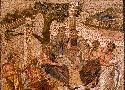
The University of Constantinople, founded as an institution of higher learning in 425, educated graduates to take on posts of authority in the imperial service or within the Church.[7] It was reorganized as a corporation of students in 849 by the regent Bardas of emperor Michael III, is considered by some to be the earliest institution of higher learning with some of the characteristics we associate today with a university (research and teaching, auto-administration, academic independence, et cetera). If a university is defined as "an institution of higher learning" then it is preceded by several others, including the Academy that it was founded to compete with and eventually replaced. If the original meaning of the word is considered "a corporation of students" then this could be the first example of such an institution.
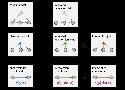
You might have come across Judea Pearl's new book, and a related interview which was widely shared in my social bubble. In the interview, Pearl dismisses most of what we do in ML as curve fitting. While I believe that's an overstatement (conveniently ignores RL for example), it's a nice...

ffmpeg livestreaming to youtube via Nvidia's NVENC and Intel's VAAPI on supported hardware - ffmpeg-livestream-to-streaming-sites-vaapi-nvenc.md
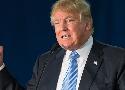
Donald Trump meets many criteria in a historian's checklist of what defines a fascist, and he echoes a wave of extremist movements in some European countries.

No matter how you design a single-payer public health insurance system, it would have lower overall health care costs, so long as for-profit private health insurers no longer exist to drive up health care costs.
"the meme gives Internet users a clear opportunity to think critically about shallow references to the Nazis or the Holocaust. And it exposes glib Nazi comparisons or Holocaust references to the harsh light of interrogation."
not due to the meme's fault, but due to incessant glib and spurious invocation of Nazis, have all modern comparisons, however thoughtful, lost all ability to be taken seriously and lead to thoughtful consideration? I worry the latter. due to the large number of valid comparisons not being made, we've somehow lost the ability to learn the ample lessons this egregious historical example allows.
do people "use Godwin’s Law to force one another to argue more thoughtfully" or to off-hand dismiss legitimate comparisons to Nazism because they bear superficial similarity to spurious comparisons, and don't bother with the difficulty and emotional burden to consider the harsh reality that there may be some truth to the comparison?
"The best way to prevent future holocausts, I believe, is not to forbear from Holocaust comparisons; instead, it’s to make sure that those comparisons are meaningful and substantive."
I hope people do make those difficult comparisons. and he gives some examples of such. I much more worry about the willingness of the public to consider such harrowing and extreme-sounding ideas.
"But I’m hopeful that we can prod our glib online rhetorical culture into a more thoughtful, historically reflective space"
I wonder what he thinks now, having made that statement in 2015.
"Should opponents of a regime that has shattered norms respond in ways that presume those norms still exist?"
what enlightened centrism this is! Americans not liking nazis destroying democracy and villifying Jews is clearly the same as Nazis disliking our democratic socialism, certainly.
"Why did so many Americans choose to act as if Hitler was like any other leader, Germany like any other country? I don’t think it was a product of strategic calculation, but of conceptual failures. It was easier to maintain established modes of courtesy, greetings and theology, than to consider alternative responses."
"Americans, including American Jews, didn’t want to be consumed by the fascist threat across the ocean. They wanted to live their lives. The best way to do that, and still be considered a good and moral person, was to pretend the news was exaggerated, that the persecution would ease in time."
everyone prefers a quiet life, in favour of being outraged by the destruction of norms around you. that's exhausting. I worry that's much more so the case nowadays in the world of unlimited on-demand entertainment at our fingertips. no one wants to go outside, much less to protest.
"Nasty anti-Nazi protests therefore were unnecessary and staged by nasty people. Similarly, Donald Trump may not mean the awful things he says. It’s performance, reality television. If he’s just kidding and yet the opposition gets down in the dirt, then his opponents are indeed the ones responsible for the decline in civil discourse."
"The only way to avoid the same conceptual failings, which admittedly still might not remedy the fundamental problem, is to perceive situations clearly. German representatives were monsters. Conditions in Germany were horrible. Making nice and being polite didn’t make Nazis nice and polite.
We see that now. We could have seen it then. The response then and now is not civility, but ruthless honesty."
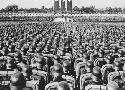
In the past, fascist politics would focus on the dominant cultural group. The goal is to make them feel like victims, to make them feel like they’ve lost something and that the thing they’ve lost has been taken from them by a specific enemy, usually some minority out-group or some opposing nation.
This is why fascism flourishes in moments of great anxiety, because you can connect that anxiety with fake loss. The story is typically that a once-great society has been destroyed by liberalism or feminism or cultural Marxism or whatever, and you make the dominant group feel angry and resentful about the loss of their status and power. Almost every manifestation of fascism mirrors this general narrative.
Part of what fascist politics does is get people to disassociate from reality. You get them to sign on to this fantasy version of reality, usually a nationalist narrative about the decline of the country and the need for a strong leader to return it to greatness, and from then on their anchor isn’t the world around them — it’s the leader.
Fascists are always telling a story about a glorious past that’s been lost, and they tap into this nostalgia. So when you fight back against fascism, you’ve got one hand tied behind your back, because the truth is messy and complex and the mythical story is always clear and compelling and entertaining. It’s hard to undercut that with facts.

"Only those safe from fascism and its practices are likely to think that there might be a benefit in exchanging ideas with fascists.”
I find this next part sadly hilariously true
"Much of American media and press on this side of the Fox News darkness does not dare to call out a fascist. That is partly out of knee-jerk complicity with the culture of leadership and celebrity worship. But I believe that it is also a matter of unbearable fear that the shape of American society, and the practices it has long depended on to maintain some semblance of democracy, are being destroyed, and no one quite knows what to do about it, save hoping to be saved by Mueller and/or impeachment."
we didn't know what to do, and still don't. Mueller and impeachment had no effect on the public discourse. we should stop hoping that engaging with bad faith "arguments" flaunting disregard for the truth in favour of building a narrative of lost glory to be remade through out-group fear and hatred will do anything either.
Once defined by his loathing for Trump, he’s now all-in for the president. Why?

The company says it was essential to President Trump's victory, but both Trump and other former clients are downplaying the role of its trademark psychological profiling.

sed 's/,,/, ,/g;s/,,/, ,/g' data.csv | column -s, -t
rev file | column -t | rev
“How long can we sugarcoat the nitty-gritty of politics in order to draw the apolitical masses to the carnival? Are we afraid of the fact that the answer will probably divide the masses that we’ve only just lured to the party and strung along with carnival spirit?”
“If we are not politically active or reactive, then the act of understanding turns into only the expression and exchange of emotional responses. Our reactions gradually retreat to become nothing more than a sad cabaret”.