32 private links
Bush and Trump both came to office determined to avoid the mistaken wars of their predecessors. Nevertheless, they both embarked on military adventures fed by a hubristic belief in American power.
But while the U.S. was strong enough — and its adversaries still weak enough — to recoup much of the damage inflicted by Bush’s war, the war unfolding in Iran today will leave behind an America that will have lost much of its global power, standing and influence, destined to confront rising adversaries all on its own.

Pakistani Foreign Minister Ishaq Dar met Tuesday in Beijing with his Chinese counterpart Wang Yi. At the end of the meeting they published a joint peace initiative:
- Immediate Cessation of Hostilities, with humanitarian assistance allowed to all war-affected areas.
- Start of peace talks as soon as possible under the principle of safeguarding the independence and security of Iran and the Gulf states. All parties will commit to refraining from the use or the threat of use of force during peace talks.
- The parties to the conflict will immediately stop attacks on important infrastructure, including energy, desalination and power facilities, and peaceful nuclear infrastructure, such as nuclear power plants.
- The parties will allow the early and safe passage of civilian and commercial ships, and restore normal passage through the Strait as soon as possible.
- Conclusion of an agreement for establishing a comprehensive peace framework based on the principles of the UN Charter and international law.
The countries with the least capacity to pay elevated prices feel it first and hardest.
The countries most exposed are those already import-dependent on fertilizer and food: South and Southeast Asia, North Africa, Sub-Saharan Africa, parts of the Middle East.

Iran is cementing its hold over the Strait of Hormuz, demanding vessels give up detailed information and detour into Iranian waters before being vetted by Iran’s Islamic Revolutionary Guards Corps.
From March 1 to 23, Iran exported about 1.6 million barrels a day on average, close to prewar levels
Iran is also bringing in extra income by charging transit fees of as much as US$2 million on some commercial ships crossing the strait.
This isn’t cowardice. It’s a calculation: If allied leaders thought that their sacrifice might count for something in Washington, they might choose differently. But most of them have stopped trying to find the hidden logic behind Trump’s actions, and they understand that any contribution they make will count for nothing. A few days or weeks later, Trump will not even remember that it happened.
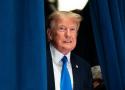
An insider says Trump “grossly overestimated” his own abilities in the conflict.
boots on the ground
Russia is providing Iran with targeting information to attack American forces in the Middle East, the first indication that another major U.S. adversary is participating — even indirectly — in the war, according to three officials familiar with the intelligence.

“The president had a feeling, again, based on fact, that Iran was going to strike the United States, was going to strike our assets in the region, and he made a determination to launch Operation Epic Fury based on all of those reasons,” Leavitt said.
“We knew that there was going to be an Israeli action, we knew that that would precipitate an attack against American forces, and we knew that if we didn’t preemptively go after them before they launched those attacks, we would suffer higher casualties,” Rubio said Monday.
“Everything that has been written about a potential War with Iran has been written incorrectly, and purposefully so,” he added. “I am the one that makes the decision, I would rather have a Deal than not but, if we don’t make a Deal, it will be a very bad day for that Country and, very sadly, its people, because they are great and wonderful, and something like this should never have happened to them.”
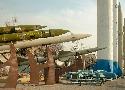
"Any American intervention would be a recipe for an all-out war in the region," Iranian Foreign Ministry spokesman Esmail Baghaei warned Wednesday during an interview with Al Jazeera English.

"In a sense, the leaked Iranian cables provide a final accounting of the 2003 United States invasion of Iraq. The notion that the Americans handed control of Iraq to Iran when they invaded now enjoys broad support, even within the United States military. A recent two-volume history of the Iraq War, published by the United States Army, details the campaign’s many missteps and its “staggering cost” in lives and money. Nearly 4,500 American troops were killed, hundreds of thousands of Iraqis died and American taxpayers spent up to $2 trillion on the war. The study, which totals hundreds of pages and draws on declassified documents, concludes: “An emboldened and expansionist Iran appears to be the only victor.”
