32 private links
For usual builds commits are here github.context.sha but for pull requests actual commits are here github.context.payload.pull_request?.head.sha


how to github app



Toyota announced this week that it is closer than ever to manufacturing solid-state batteries for its future electric cars.
The easiest tool to use for piping a log file from journald to Grafana would probably be Loki. Loki was developed by the Grafana team specifically for the purpose of log aggregation, and it's designed to work seamlessly with Grafana for visualization. Therefore, the integration between Loki and Grafana is likely to be smoother and require fewer steps than the other two options.
Setting up Loki and getting it to work with journald and Grafana involves the following steps:
-
Installing Loki: You can download precompiled binaries directly from the Loki GitHub page or use Docker to run Loki. The Docker approach is usually easier, as you only need to pull the image and start a container.
-
Configuring Loki: This involves creating a config file that Loki will use to know where and how to store the logs. You can find example configuration files in the Loki repository to guide you.
-
Installing Promtail: Promtail is the agent that ships the logs from your servers to Loki. Promtail can read logs from many different places, including journald. Like Loki, you can install Promtail by downloading a precompiled binary or using Docker.
-
Configuring Promtail: The main thing you'll need to configure is the
scrape_configssection of the Promtail config file. This is where you tell Promtail where to find the logs it should be shipping. For journald logs, you can use thejournalblock. You'll also need to set theloki_push_urlto the URL of your Loki server. -
Connecting Loki to Grafana: Finally, you'll need to add Loki as a data source in Grafana. This is done in the Grafana UI and simply involves providing the URL of your Loki server.
Remember to check official documentation for the most recent and detailed steps, as these can change with new releases and updates.



“I was told for decades that Lockheed had some of these retrieved materials,” he said. “And I tried to get, as I recall, a classified approval by the Pentagon to have me go look at the stuff. They would not approve that. I don’t know what all the numbers were, what kind of classification it was, but they would not give that to me.” He told me that the Pentagon had not provided a reason. I asked if that was why he’d requested SAP status for AATIP. He said, “Yeah, that’s why I wanted them to take a look at it. But they wouldn’t give me the clearance.” (A representative of Lockheed Martin declined to comment for this article.)

Warp gives you the kind of IDE on your command line that you often assumed you would have, but you've never really had.


With a new Fill-in-the-Middle paradigm, GitHub engineers improved the way GitHub Copilot contextualizes your code. By continuing to develop and test advanced retrieval algorithms, they’re working on making our AI tool even more advanced.

DeSantis, who is running for the White House in 2024, said that the law was designed to counter “the malign influence of the Chinese Communist Party."
Manjusha Kulkarni, the executive director of AAPI Equity Alliance and a co-founder of Stop AAPI Hate, compared the measure to the "alien land laws" passed in California and other states in the 20th century, which restricted Asian migrants' right to own land. The law, she said, signals to Chinese Americans "that they don't belong."

But the town’s Elysian charm comes with a dark past. Just on the other side of the park lies the neighborhood of Willard-Hay. There, the median household income drops to about $55,000 per year, and there’s quite a bit more crime. Willard-Hay is 26 percent white and 40 percent Black. Golden Valley is 85 percent white and 5 percent Black — the result of pervasive racial covenants.
At the very least, the steady stream of Justice Department reports depicting rampant police abuse ought to temper the claim that policing shortages are fueling crime. It’s no coincidence that the cities we most associate with violence also have long and documented histories of police abuse. When people don’t trust law enforcement, they stop cooperating and resolve disputes in other ways. Instead of fighting to retain police officers who feel threatened by accountability and perpetuate that distrust, cities might consider just letting them leave.

To Reese, that means having hard conversations about that history with her children, friends and neighbors. She plans to frame the covenant and hang it in her home as evidence of systemic racism that needs to be addressed.
"People will try to say things didn't happen or they weren't as bad as they seem," Reese said. "It's always downplayed."
Gordon argues that racially restrictive covenants are the "original sin" of segregation in America and are largely responsible for the racial wealth gap that exists today.
Gordon said the covenants are not mere artifacts of a painful past. They laid the foundation for other discriminatory practices, such as zoning and redlining, that picked up where covenants left off.
He said white builders and buyers deemed segregation and white supremacy as trendy. Once it was in vogue, people put it in their deeds and assumed that that's what their white buyers wanted. The repetitive language of these deeds, which seems nearly identical from one deed to the next, suggests that racial restrictions were boilerplate clauses.

Source Latent Space Podcast Ep. 2: Why you are holding your GPUs wrong OpenAI just rollicked the AI world yet again yesterday — while releasing the long awaited ChatGPT API, they also priced it at $2 per million tokens generated, which is 90% cheaper than the text-davinci-003 pricing of the “GPT3.5” family. Their blogpost on how they did it is vague: Through a series
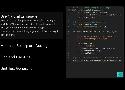
A "Copilot for X" guide from the team that built the first real Copilot competitor!