32 private links

in-depth explanation of the efficiency of increasing developed country public spending on clean energy research and development, which through technology spillover can benefit developing countries, not punish them, unlike cruder methods like carbon limits, criticized as disproportionately hurting developing countries that are most reliant on fossil fuel for economic growth


why do gender-segregated sports leagues exist?


good bundle backup tips

cultural genocide through dystopian digital surveillance and Orwellian re-education
"One document explicitly states that the purpose of the pervasive digital surveillance is “to prevent problems before they happen” -- in other words, to calculate who might rebel and detain them before they have a chance."
"Sauytbay called the detention center a “concentration camp...much more horrifying than prison,” with rape, brainwashing and torture in a “black room” were people screamed. She and another former prisoner, Zaomure Duwati, also told the ICIJ detainees were given medication that made them listless and obedient, and every move was surveilled."
"The documents make clear that many of those detained have not actually done anything. One document explicitly states that the purpose of the pervasive digital surveillance is “to prevent problems before they happen” -- in other words, to calculate who might rebel and detain them before they have a chance."

an interesting guide. who said the perfect media server doesn't exist?
overview and benchmarks

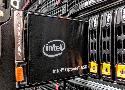
if you are building a 10TB ZFS proof of concept NAS with 1GbE networking, the Intel Optane Memory 32GB M.2 drive is an enormous upgrade over SATA and SAS devices in the sub $100 category if you can live with the lower endurance and reliability ratings.
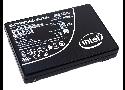
As we have tested the device and had both it and the M.2 version in our lab for some time, the question is whether it is worthwhile. Since 1PB written would be about the maximum we plan for on low-end storage server equipped with only 10GbE, the Optane 900p/ 905p we see as a better value. They are faster and higher capacity with a lower cost per GB.
from October 2018:
"If you already have an SSD as your main drive and have your games and large files on your mechanical drive, it is still worth getting a second SSD to use as a cache for the mechanical drive. This small investment to get either a 32GB or a 64GB SSD and use it as your hard drive’s cache is going to be worth your money for the performance gains.
In fact, since SSDs are becoming cheaper and cheaper, there should be no reason for you not to get a 64GB SSD to use as a cache memory for your HDD."
“Authority” in this case doesn’t get much better than Matthew Ahrens, one of the cofounders of ZFS at Sun Microsystems and current ZFS developer at Delphix. In the comments to one of my filesystem articles on Ars Technica, Matthew said “There’s nothing special about ZFS that requires/encourages the use of ECC RAM more so than any other filesystem.”

So, Are Enterprise Drives Worth The Cost?
From a pure reliability perspective, the data we have says the answer is clear: No.
Enterprise drives do have one advantage: longer warranties. That’s a benefit only if the higher price you pay for the longer warranty is less than what you expect to spend on replacing the drive.
This leads to an obvious conclusion: If you’re OK with buying the replacements yourself after the warranty is up, then buy the cheaper consumer drives.

"In a sense, the leaked Iranian cables provide a final accounting of the 2003 United States invasion of Iraq. The notion that the Americans handed control of Iraq to Iran when they invaded now enjoys broad support, even within the United States military. A recent two-volume history of the Iraq War, published by the United States Army, details the campaign’s many missteps and its “staggering cost” in lives and money. Nearly 4,500 American troops were killed, hundreds of thousands of Iraqis died and American taxpayers spent up to $2 trillion on the war. The study, which totals hundreds of pages and draws on declassified documents, concludes: “An emboldened and expansionist Iran appears to be the only victor.”

we observe only one point in the distribution, because that's the most likely outcome. that spreads most in the environment, for example ending up with the most photons hitting our eyes.
"But there’s a second condition that a quantum property must meet to be observed. Although immunity to interaction with the environment assures the stability of a pointer state, we still have to get at the information about it somehow. We can do that only if it gets imprinted in the object’s environment. When you see an object, for example, that information is delivered to your retina by the photons scattering off it. They carry information to you in the form of a partial replica of certain aspects of the object, saying something about its position, shape and color. Lots of replicas are needed if many observers are to agree on a measured value — a hallmark of classicality. Thus, as Zurek argued in the 2000s, our ability to observe some property depends not only on whether it is selected as a pointer state, but also on how substantial a footprint it makes in the environment. The states that are best at creating replicas in the environment — the “fittest,” you might say — are the only ones accessible to measurement. That’s why Zurek calls the idea quantum Darwinism."
"One of the most remarkable ideas in this theoretical framework is that the definite properties of objects that we associate with classical physics — position and speed, say — are selected from a menu of quantum possibilities in a process loosely analogous to natural selection in evolution: The properties that survive are in some sense the “fittest.” As in natural selection, the survivors are those that make the most copies of themselves. This means that many independent observers can make measurements of a quantum system and agree on the outcome — a hallmark of classical behavior."
but it's all so natural, of course
"Riedel says we could hardly expect otherwise, though: In his view, QD is really just the careful and systematic application of standard quantum mechanics to the interaction of a quantum system with its environment. Although this is virtually impossible to do in practice for most quantum measurements, if you can sufficiently simplify a measurement, the predictions are clear, he said: “QD is most like an internal self-consistency check on quantum theory itself.”
we're all Bayesians now
"This experiment therefore shows that, at least for local models of quantum mechanics, we need to rethink our notion of objectivity. The facts we experience in our macroscopic world appear to remain safe, but a major question arises over how existing interpretations of quantum mechanics can accommodate subjective facts.
Some physicists see these new developments as bolstering interpretations that allow more than one outcome to occur for an observation, for example the existence of parallel universes in which each outcome happens. Others see it as compelling evidence for intrinsically observer-dependent theories such as Quantum Bayesianism, in which an agent's actions and experiences are central concerns of the theory."
"the system of making capitalism work well for most people is broken" - Ray Dalio
I agree with the points, with a small difference. I summarize the points as:
1 - abundance of capital warps incentives
2 - fiscal deficits in growth periods are a recipe for disaster
my phrasing of #2 makes total sense, but not because of his rationale of "where will we find the money to support growing debt loads?" which contradicts #1. more debt would actually help balance the overubandance of investment capital, while capitalising on historically low rates.