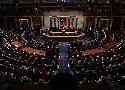
Human brains aren’t built for self-rule, says Shawn Rosenberg. That’s more evident than ever.
Rick Shenkman, founder of George Washington University’s History News Network, is the author of Political Animals: How Our Stone-Age Brain Gets in the Way of Smart Politic
read her first sci-fi book Infomocracy, but felt it was narrow and idea-light
"how many of the recent “failures of democracy” have come about not because “institutions eroded” but because those institutions either were never intended to be democratic or have recently been adjusted to be exclusionary?"
"Democracy is not a unitary state that can be achieved, but a continuous process. We need to keep reinventing and refining government, to keep up with changes in society and technology and to keep it from being too easy for elites with resources to exploit. And it is worth fighting for. Not because of the founders, or because it sounds good, but because while democracy may be far from perfect, it is still the best system we’ve got. At least so far."

How the United States lost the faith of its citizens—and what it can do to win them back
adapted from Yascha Mounk’s new book, The People vs. Democracy: Why Our Freedom Is in Danger and How to Save It.


I’m a social psychologist, so I’m interested primarily in the situational and contextual factors that drive human behavior. When you’re seeking to predict or explain a person’s actions, looking at the social norms, and the person’s context, is usually a pretty safe bet. Situational constraints typically predict behavior far better than personality, intelligence, or other individual-level traits.
So when I see a student failing to complete assignments, missing deadlines, or not delivering results in other aspects of their life, I’m moved to ask: what are the situational factors holding this student back? What needs are currently not being met? And, when it comes to behavioral “laziness,” I’m especially moved to ask: what are the barriers to action that I can’t see?
There are always barriers. Recognizing those barriers— and viewing them as legitimate — is often the first step to breaking “lazy” behavior patterns.



why do gender-segregated sports leagues exist?


an interesting guide. who said the perfect media server doesn't exist?

"In a sense, the leaked Iranian cables provide a final accounting of the 2003 United States invasion of Iraq. The notion that the Americans handed control of Iraq to Iran when they invaded now enjoys broad support, even within the United States military. A recent two-volume history of the Iraq War, published by the United States Army, details the campaign’s many missteps and its “staggering cost” in lives and money. Nearly 4,500 American troops were killed, hundreds of thousands of Iraqis died and American taxpayers spent up to $2 trillion on the war. The study, which totals hundreds of pages and draws on declassified documents, concludes: “An emboldened and expansionist Iran appears to be the only victor.”