bold thinking from a guy who knows a thing or two. change to the establishment being proposed by the establishment.
"Current supervisory tools were designed to restrain banks from overextending themselves. Right now, we have the opposite problem: banks are not filling the void left by the retreat of market-based finance.
Banks should be part of the solution, not part of the problem. Now is the time to draw on the accumulated balance sheet buffers that were built while the sun was shining. To boost lending capacity further, we need a global freeze on bank dividends and share buybacks.
However, this first step may not be enough, as lenders pull in their horns and retreat from risk-taking. That’s why there needs to be a second step of enlisting the banks to lend, using central bank funding for lending schemes. Risk sharing by governments through guarantee schemes is needed to ensure that economic risks are not pushed to banks or the central bank.
A crisis in market finance needs market-based solutions. For central bank liquidity to reach the far corners of the financial system, it must directly target individuals and businesses that need it most. Otherwise, central bank actions may be just pushing on a string."
bush Pelosi check mailouts
"The Growth Delusion" is an accessible book that examines one of the most fundamental—yet flawed—concepts in economics.
"China has also taken steps to gain greater control over its technology sector, which flourished largely free from government influence.
Approvals of new video game titles have been frozen since a shift in regulation that has given the Communist Party’s propaganda department a direct role, an unusual degree of power over what had been a government process. Tencent, China’s video game giant and one of the world’s largest technology companies, has lost nearly one-third of its market value. Tencent declined to comment.
Private entrepreneurs are loath to speak out for fear of attracting official condemnation. But signs of distress aren’t hard to find.
Last month, Chen Shouhong, the founder of an investment research firm, asked a group of executive M.B.A. students — many of whom already owned publicly listed companies — to choose between panic and anxiety to describe how they feel about the economy. An overwhelming majority chose panic, according to a transcript. Mr. Chen declined to be interviewed."
"The growing use of immunity, however, has raised worries that private companies have been given the green light to win business contracts illegally.
A local prosecutor said they dropped the charge because Mr Yang had made good use of the state subsidy. “It is true that he has made up some facts,” said the prosecutor. “But the project is completed and is having a positive impact.”
how do you interpret the different relationship between the two variables among Democrats and Republicans?
Goodhart's Law: "When a measure becomes a target, it ceases to be a good measure."
floccinaucinihilipilification: trying to put a firm estimate on certain things is essentially worthless
“Central bank independence increasingly looks like a brief historical episode that peaked around the turn of the century,’’ said Joachim Fels, global economic adviser at Pacific Investment Management Co. “Like it or not, get used to the new normal of dependent central banks.’’
“Central bank independence increasingly looks like a brief historical episode that peaked around the turn of the century,’’ said Joachim Fels, global economic adviser at Pacific Investment Management Co. “Like it or not, get used to the new normal of dependent central banks.’’
"One of the reasons I think we haven’t seen more strikes already — given that the labour share of the national pie has been declining in most G20 countries since the 1980s — is that asset prices have risen considerably in that time, offsetting stagnant wages for some" (emphasis some)
"An asset price collapse and a lasting period of low returns would bring a looming pensions crisis to the top of the political agenda. That would, in turn, force us finally to reckon with an economic model that has put the interests of capital before workers for far too long.
.. we are due for a swing away from a financially orientated economy to one driven more by income growth."

No social security net, no family security and a pensions crisis will evolve into a humanitarian catastrophe. In the future, the economic gap between elderly China and middle-aged US will again widen. From this, we can say that the US economy will not be overtaken by China but, rather, by India. China’s economic vitality will continue to decline, which will have a disastrous impact on the global economy.
this would be a massive sea change in american-style capitalism. though whether it's genuine and going to lead to actual differences in behaviour is quiet debatable. as the article concludes, quoting Andy Green from Center for American Progress, “We need to see the details to see if they put their money where their mouth is.”
"The change amounts to a call to reform capitalism in a time in which rising populism and concern about climate change have led politicians and shareholder activists to demand that companies consider their impact on the world beyond their balance sheets.
It is a significant departure from the bedrock belief that businesses serve the owners of their capital — a philosophy championed by Nobel Prize-winning economist Milton Friedman and which has driven corporate America for decades."
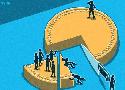
moving beyond the profit motive
"The signs of this new post-supply side era are all around us. Witness the rise of the B-corporations, which balance purpose and profit, and the growth of investing based on environmental, social and governance factors."


