Expert agreement = share of experts rating the dimension important or essential
Driver score = 100 − mean driver–outcome rating; higher means more driver-like
Combined score = driver score × expert agreement ÷ 100
Combined Score Ranking
- Autonomy 64.45
- Connection 56.94
- Belonging 55.85
- Acceptance 52.13
- Sense of safety 50.99
- Competence 50.93
- Self-congruence 48.92
- Self-acceptance 47.48
- Engagement 46.21
- Achievement 45.60
- Meaning and purpose — 44.40
- Optimism 43.73
- Development 43.58
- Activities and functioning 40.95
- Fun 36.51
- Vitality 31.49
- Calmness 26.89
- Life satisfaction 25.97
- Happiness 22.76

We assessed the 29 winning essays of the Bigelow Institute of Consciousness Studies (BICS) contest using an evidence hierarchy approach adopted by many scientific fields. Two independent judges rated the target essays for their quality of scientific evidence, reproducibility, and replicability using an evidence hierarchy adapted from several published models that accommodate both qualitative and quantitative evidence.
According to our criteria, six essays (20.7%) were categorized as the highest level of scientific evidence, four essays (13.8%) were categorized at a medium level of scientific evidence, whereas the remaining 19 essays (65.5%) were considered a low level of scientific evidence. The overall agreement of the essay rankings between the present authors' classifications of evidence quality and the rating system used by the BICS judges was only 44.8%, with a nonsignificant Spearman's rho correlation of .03.
This result indicates extremely little concordance (overlap) of the two evaluation systems, which corroborates prior research on the critical shortcomings of evidence hierarchies. The essays representing the highest level of scientific evidence per our criteria involved near-death experiences and mental mediumship. For other anomalies that ostensibly support the survival hypothesis (e.g., physical mediumship or electronic voice phenomena), more studies with refined experimental designs are needed to improve their quality of evidence as defined in current scientific terms. Important considerations and future research directions are likewise discussed.
The slide was exacerbated by concerns over $100bn of shares that are expected to hit the market on August 6th, after the expiry of a lockup period following the listing that prevented early backers, executives and employees from cashing out.
At its latest survey, in 2021, four-fifths of dsa members over the age of 25 had a college degree—twice the share of American adults. A third had a postgraduate degree and a third were gay or queer. Ashik Siddique, a co-chair of the dsa, says it is the largest queer membership organisation in the country. Members found to be working as cops can be expelled.
Reuters reported on Tuesday that a customer of Modal, a company that offers software infrastructure for training and running AI services, was one of the entities compromised by OpenAI’s agent. In a statement to WIRED, Modal’s chief technology officer Akshat Bubna confirmed that OpenAI’s agent exploited a vulnerability in one of its customer’s codebases, which was running on Modal’s infrastructure. However, Bubna says, “Modal’s platform was not compromised in any way.” The identity of the customer could not be determined.

Each peptide that’s recommended this week represents the possibility of a new profit stream for compounders and telehealth companies. By some estimates, the total market for these seven peptides could be worth billions of dollars. And, if they’re ultimately approved, it will also serve as another example of Kennedy getting his way over the objections of the researchers who work for him.
In the long run, I expect the economy to be much richer because of AI, all else equal. All 15 respondents predicted that AI would boost productivity.
I also expect high returns to capital because of growth from AI.
Putting this all together, I expect labor force participation to decline in the long run.
I expect in the long run work will be less fundamental to ensuring a reasonable level of consumption.
I also expect people will benefit from capital income that induces income effects but not substitution effects, either via directly owning capital themselves or by receiving payment from civic institutions or governments.
I don’t think it’s likely that labor force participation will decline in the long run because AI makes it impossible for most people to find jobs and drives them towards destitution.

To offset negative externalities imposed on displaced workers from rapid automation, taxes on automation might be considered in this scenario.
... the possibility of using taxes on AI consumption to support workforce development initiatives.
... it could potentially be funded through taxes on AI-driven revenues from firms above a certain high level of market capitalization.
... exploring a "low-rate business wealth tax" as a complement to income taxes.
Low: Invest in upskilling through workforce training grants, Reform tax incentives for worker retention and retraining, Close corporate tax loopholes, Accelerate permits and approvals for AI infrastructure
Moderate: Establish trade adjustment assistance for AI displacement (skill training), Implement taxes on compute or token generation
High: Create national sovereign wealth funds with stakes in AI, Adopt or modernize value-added taxes, Implement new revenue structures to account for AI’s growing share of the economy
If AI winds up controlled by, and benefiting only a few, while most people lack agency and access to AI-driven opportunity, we will have failed to deliver on its promise.
Without thoughtful policies, AI could widen inequality by compounding advantages for those already positioned to capture the upside while communities that begin with fewer resources fall further behind, excluded from new tools, new industries, and new opportunities. There is also a risk that the economic gains concentrate within a small number of firms like OpenAI, even as the technology itself becomes more powerful and widely used. Workers using AI might well agree that it’s increasing their productivity without believing they’re seeing the benefits.
Policymakers could rebalance the tax base by increasing reliance on capital-based revenues—such as higher taxes on capital gains at the top, corporate income, or targeted measures on sustained AI-driven returns—and by exploring new approaches such as taxes related to automated labor.
Public Wealth Fund, Pathways into human-centered work (skills training),

the real populist backlash will start if and when the unemployment rate rises by at least 2 percentage points, and is accompanied by a clear narrative that AI is to blame.
credible commitment—building institutions in calmer moments that bind political action in turbulent ones—is a central problem of political economy
crisis-era policy is shaped by what’s available in the air rather than by what’s best, and right now the ideas most readily at hand are the wrong ones: data center moratoria, blunt sectoral bans on deployment, punitive taxation of compute regardless of use, and structural breakups designed for symbolic rather than functional purposes

-
By using keyword searches to review hundreds of grants and terminate them en masse rather than reviewing them individually on their merits, the Trump administration targeted research it found politically disfavorable, which is a First Amendment violation.
-
In terminating 283 Department of Energy grants from states where a majority voted for Kamala Harris in the 2024 election, and leaving untouched hundreds of grants that went to “red” states, the Trump administration wrongly punished researchers for merely living in states the White House politically opposed.
-
And by terminating billions of dollars in grants, and never rerouting that money to other grant opportunities, the Trump administration violated the constitution by not spending money in ways Congress specifically required through laws it passed on how research funds should be used.
President Trump took executive action to impose 50% tariffs on a wide range of imports from Canada.
Trump signed three proclamations formalizing the tariffs, which were made by invoking Section 338 of the Tariff Act of 1930, often referred to as the Smoot-Hawley Tariff Act. The century-old law is a different statute than the law Trump previously cited ‒ the International Emergency Economic Powers Act of 1977 ‒ in his push to use presidential emergency powers to impose reciprocal tariffs on countries.
The Supreme Court in February blocked Trump's use of emergency powers to impose tariffs under the 1977 law, forcing the White House to pursue other legal avenues to unilaterally levy fees on imports.
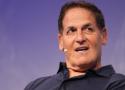
Allowing employees to hold company equity is also associated with increased productivity and less turnover, and a 2004 Rutgers University study found companies offering employee ownership stakes of at least 5% have a higher likelihood of survival than those without the benefit, which researchers attributed to greater employment security.
“When you align everyone’s incentives with a common goal, everyone will work harder to achieve that goal,” Ethan Rouen, a Harvard Business School professor of business administration, said in an interview for the college about Harvard’s research. “When you have an equity stake, all of a sudden you have a claim on the upside, and so that incentivizes you to work harder to increase that upside. It is something that has the potential to grow the pie and create wealth for everyone involved.”
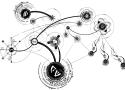
How the Isaac Caret Hoax was made.

The thing is, the documents do provide proof that a foreign government attempted to directly interfere in the election. However, it was not by China, but by the Russian government — on behalf of president Trump’s 2020 election bid.

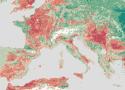
A CSIC team in Barcelona has developed CADI, a platform that forecasts, on a 10‑kilometre grid, how much farmland will lose productivity to climate change by 2100; Spain’s interior fares worse than the Cantabrian coast.