Intermittent fasting (IF) is a dietary protocol where energy restriction is induced by alternate periods of ad libitum feeding and fasting. The present study has sought to investigate the relationshi...

PubMed comprises more than 30 million citations for biomedical literature from MEDLINE, life science journals, and online books. Citations may include links to full-text content from PubMed Central and publisher web sites.

The city that had been founded to police the traffic of opium became the epicenter of Hong Kong’s narcotics trade.
On this tiny rectangle of ground, a single community created something that had only existed before in the avant garde imagination: the “organic megastructure.”
Perhaps Kowloon was also the first, true, physical monument to the internet. A city that offered a glimpse into the infinite horizons, structural possibilities—and inherent amorality—of the digital realm.
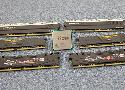
Adata also aims to impress with the XPG Sage's read and write IOPS, which allegedly come in at 1,000,000 and 800,000.
Microsoft and NIST agree special characters shouldn't be required, and to not force password resets/changes, with an 8 character minimum

I’ve been following the NSNG (No Sugar No Grains) ‘way of eating’ for the last year and the results have been incredible. I weighed 191 pounds near the beginning of 2017 and today (Dec 7, 2017) I weighed in at 160. So, 31 pounds have disappeared, which is truly incredible. The statins I had been taking …
We show that this Neural Network-Gaussian Process correspondence surprisingly extends to all modern feedforward or recurrent neural networks composed of multilayer perceptron, RNNs (e.g. LSTMs, GRUs), (nD or graph) convolution, pooling, skip connection, attention, batch normalization, and/or layer normalization. More generally, we introduce a language for expressing neural network computations, and our result encompasses all such expressible neural networks. This work serves as a tutorial on the tensor programs technique formulated in Yang (2019) and elucidates the Gaussian Process results obtained there. We provide open-source implementations of the Gaussian Process kernels of simple RNN, GRU, transformer, and batchnorm+ReLU network at this http URL.
Wide neural networks with random weights and biases are Gaussian processes,
as originally observed by Neal (1995) and more recently by Lee et al. (2018)
and Matthews et al. (2018) for deep fully-connected networks, as well as by
Novak et al. (2019) and Garriga-Alonso et al. (2019) for deep convolutional
networks. We show that this Neural Network-Gaussian Process correspondence
surprisingly extends to all modern feedforward or recurrent neural networks
composed of multilayer perceptron, RNNs (e.g. LSTMs, GRUs), (nD or graph)
convolution, pooling, skip connection, attention, batch normalization, and/or
layer normalization. More generally, we introduce a language for expressing
neural network computations, and our result encompasses all such expressible
neural networks. This work serves as a tutorial on the tensor programs
technique formulated in Yang (2019) and elucidates the Gaussian Process results
obtained there. We provide open-source implementations of the Gaussian Process
kernels of simple RNN, GRU, transformer, and batchnorm+ReLU network at
github.com/thegregyang/GP4A.
pick the right raid chunk size
Planning problems are among the most important and well-studied problems in
artificial intelligence. They are most typically solved by tree search
algorithms that simulate ahead into the future, evaluate future states, and
back-up those evaluations to the root of a search tree. Among these algorithms,
Monte-Carlo tree search (MCTS) is one of the most general, powerful and widely
used. A typical implementation of MCTS uses cleverly designed rules, optimized
to the particular characteristics of the domain. These rules control where the
simulation traverses, what to evaluate in the states that are reached, and how
to back-up those evaluations. In this paper we instead learn where, what and
how to search. Our architecture, which we call an MCTSnet, incorporates
simulation-based search inside a neural network, by expanding, evaluating and
backing-up a vector embedding. The parameters of the network are trained
end-to-end using gradient-based optimisation. When applied to small searches in
the well known planning problem Sokoban, the learned search algorithm
significantly outperformed MCTS baselines.
repressed memories aren't a thing
The idea that people "block out" traumatic memories has been proven wrong over and over. Why, then, do therapists continue to promote it?

"The Growth Delusion" is an accessible book that examines one of the most fundamental—yet flawed—concepts in economics.

Firefox codec workaround on clear linux

netdata -D -u "user"
The FIT limiter, is a dynamic limiter of voltage and will set a different maximum for each CPU. To find out what your limit is, enable PBO to max out your TDC, EDC, and PPT limits to motherboard levels. Now temperature, FIT and Fmax are your only limiters. Use auto-overclock to raise Fmax by 200MHz, removing that barrier. Run an all core test and overserve (preferably with CPUz) what your voltage maxes out at. That is the FIT voltage, and any voltage below that AMD's algorithm deems "safe".